
 4WARN Insights Blog
 Who's fighting for whom?
“I will fight for you.”
Sound familiar? It’s one of those scrappy lawyers in a TV ad again. On his website you’ll find multimillion-dollar judgments he’s won for people just like you.
Is he telling the truth?
You be the judge. While he’s fighting for you, he’s also fighting for his own fees (a big chunk of any damages you might win), the marketers who lure prospective plaintiffs to his firm, the ads that convert regular people into litigants, the investors who fund his litigation machine, and his analysts, who are scouring laws, contracts, insurance policies, jurisdictions, and courts for angles to exploit.
If he wins a $1 million judgment…you’ll maybe see half of that.
Not only is he making a lot of money, he’s draining it from the economy, including your insurer most likely. In 2020, the tort law system cost the country $443 billion – or 2.1% of the national gross domestic product and $3,621 per household, according to the institute for legal reform. That was about $10 a day out of the family budget (then came 9% inflation).
Call it the “tort tax,” which has been described as the negative impact of plaintiff lawyers’ tactics on household costs, regardless of whether or not the household is involved in civil litigation.
Justice vs. legal system abuse
Don’t misinterpret what we’re saying. Honest lawyers are important and should earn a good living. We also support compensation for insured parties, litigation to enforce contracts, and zealous advocacy. The civil litigation system properly holds insurers, manufacturers, and commercial property owners accountable for their promises and obligations.
But there’s a whole other level of legal system activity, excessive and abusive, that’s draining our economy of scarce resources. The impact of excessive tort costs resulted in the loss of 4.2 million American jobs and $429 billion in GDP, according to a 2021 report (PDF) by The Perryman Group.
Boston Consulting Group (BCG) uses the term social inflation to describe insurance costs over and above economic inflation. Drivers include $180 million in annual legal advertising spending (2022) and $17 billion in capital for third-party litigation funders (2021).
Investing in excess
Litigation funding is a new term to most of us. In a recent Harris Poll, 59% of U.S. adults didn’t know that “third parties, like hedge funds or foreign entities, who have no relationship to the plaintiff, often secretly finance litigation in exchange for a share of the jury award or settlement as a return on their investment.” If you’ve invested in it recently, your return has outpaced the S&P Global 500.

Litigation funding is projected to grow globally from $17 billion in 2021 to $31 billion by 2028, according to BCG. The firm also cites legal marketing as a social inflation factor, as seen in rapid growth in TV legal ads, increased traffic to law firms’ websites, and rapidly rising counts of nuclear (greater than $10 million) verdicts.
So naturally, our premiums are soaring. Auto, medical and property insurance are driving record inflation. Auto insurance rose more than 22% in the first four months of this year alone. Coverage can be outstripped by costs of opportunists’ tech-enabled claims instigation and/or mass litigation. Insurers are strained to the breaking point. Some go bankrupt, as several have in Florida and Louisiana recently. Or they pull out. State-sponsored insurance programs sometimes enter the void, and even their premiums soar.
But wait, isn’t the climate driving the insurance crisis?
Although Florida and Louisiana are clearly disaster-prone regions, weather is only part of the problem. “Legal system abuse and claim fraud are the man-made factors that have generated Florida’s property insurance crisis, not catastrophe losses,” Insurance Information Institute spokesman Mark Friedlander told the New York Times.
Consider this: Florida accounts for only 15% of U.S. homeowners insurance claims but nearly 71 percent of the nation’s homeowners claim-related litigation, according to Florida’s Office of Insurance Regulation. St. John’s Insurance Co., driven out of business in 2022, saw new litigations rise nearly 20-fold from 2016 to 2021.
We’re working to fix it
All of this is to say that if we want the protection insurance affords – the pooling and management of risk that helps us if we have a crash, injury, fire or serious disease – we need viable insurance companies. They need to be solvent, profitable, regulated, fair, and sustainable. And we need to be able to afford coverage. It’s not a choice. Insurance is woven into our way of life, and only the wealthiest among us can even consider foregoing it.
Perhaps the biggest cost driver is the significant increase in legal system abuse, fueled by fraud, deception, greed, and the same digital technologies that sell us products we can’t afford, serve up content we shouldn’t consume, or otherwise prey on people’s good faith.
Some of my best friends are lawyers who keep big companies honest. I respect them. But when I first looked at the hyperlitigation happening in Florida, and realized it was spreading around the U.S., I couldn’t stop investigating, learning, and working on solutions.
In that sense, we at 4WARN are the people who are truly fighting for you.
About the Author
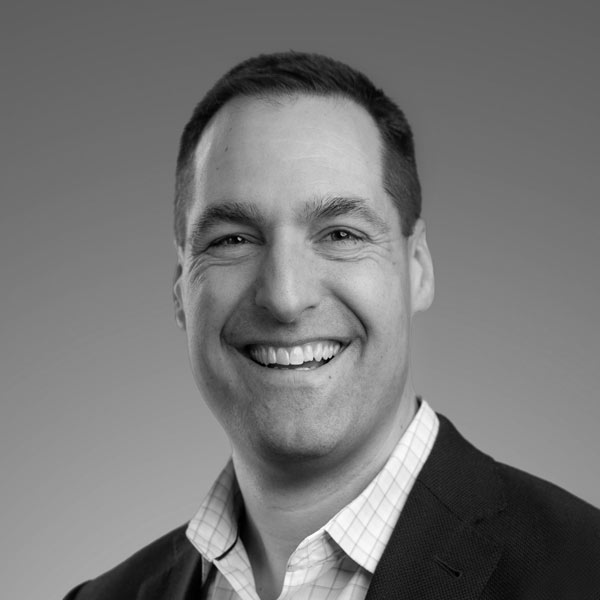
Todd has over 25 years of experience founding and transforming multiple technology companies, leading organizational growth from start-up to post IPO, and helping build more than $5 billion in market value.
Earlier in his career, Todd co-founded and held leadership roles at Silknet (acquired for $4.2B by Kana), Unica (acquired for $480M by IBM), and Newforma (acquired by Battery Ventures).
Critical to the research that unearthed tech-enabled claim instigation, Todd has developed machine learning algorithms and analytical approaches that predict future events to help measure next-generation cyber risk targeting insurance organizations as well as impacts to financial solvency.
Todd is a graduate of Bates College with degrees in Physics, Astronomy, and Mathematics with advanced studies from the Smithsonian Center for Astrophysics at Harvard University.
Get in Touch with Us Today
Empower your strategy with 4WARN's expertise and steer clear of tech-enabled claim instigation risks.